How to Build a RAG Chatbot Knowledge Base That Doesn't Hallucinate
A RAG chatbot knowledge base grounds AI answers in your own documents instead of the model's guesswork. Here's how the retrieval, embeddings, and source attribution actually work in production — from the engineer running FlowMaticX live for clients today.

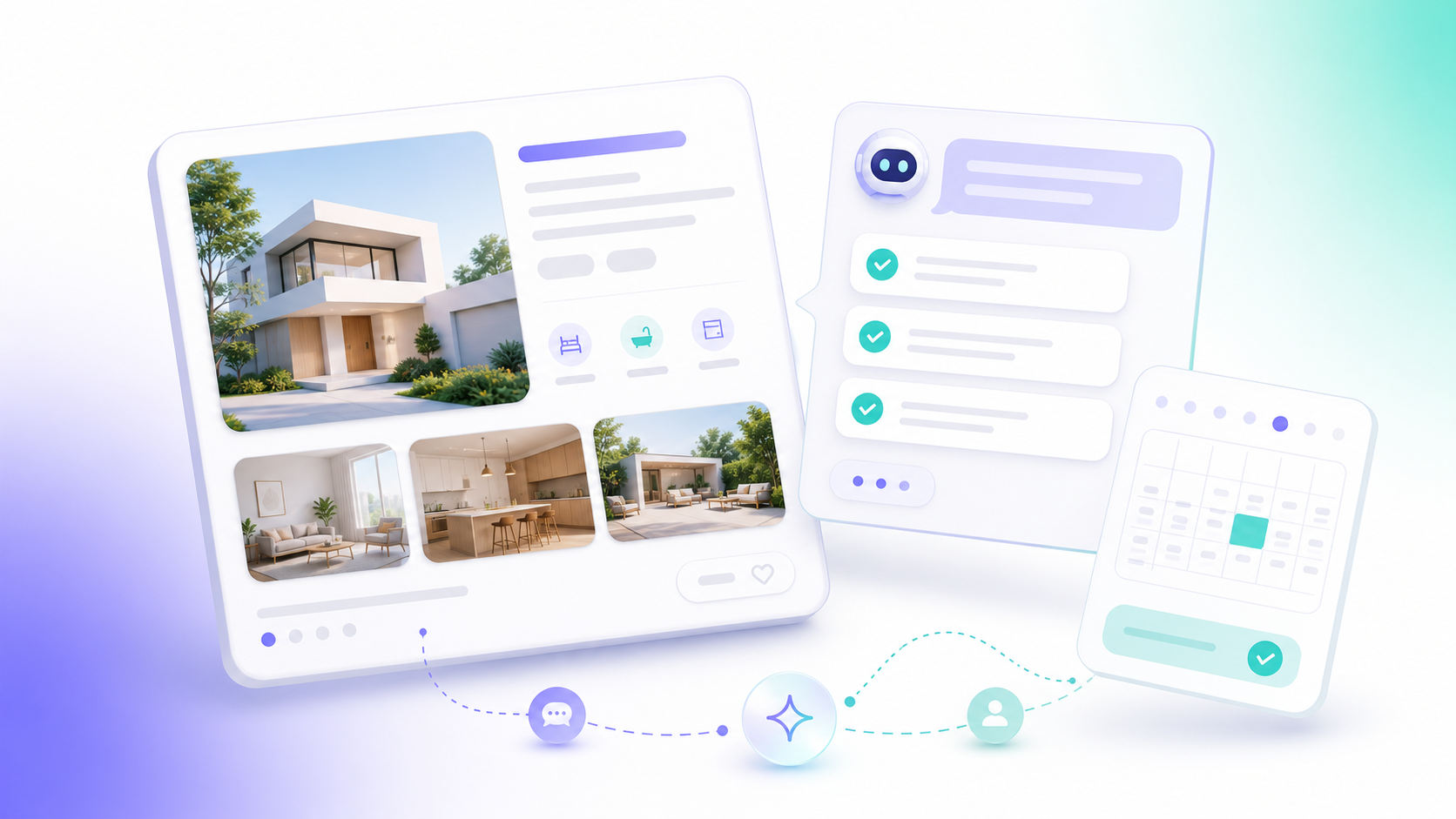
A RAG chatbot knowledge base is the difference between an AI assistant that quotes your real pricing and one that invents it. RAG — retrieval-augmented generation — means the bot fetches relevant chunks from your documents before it answers, so the language model writes from grounded facts instead of memory. I build and operate this in production. FlowMaticX, my own AI SaaS, runs RAG-grounded chatbots in 10 languages with a real client, Armela, a Dubai real-estate firm that has customers asking about listings in live chat. So this isn't theory. This is what I ship.
If you've ever watched a chatbot confidently make up a refund policy that doesn't exist, you already understand the problem RAG solves. Let me walk through how the knowledge base actually works, where teams get it wrong, and what "good" looks like.
Why a knowledge base beats a fine-tuned model
People hear "custom AI" and assume you must retrain the model on company data. For 95% of support and sales chatbots, that's the expensive wrong turn. Fine-tuning bakes knowledge into weights — which means every price change, new FAQ, or product launch needs another training run. It's slow, costly, and you still can't trace where an answer came from.
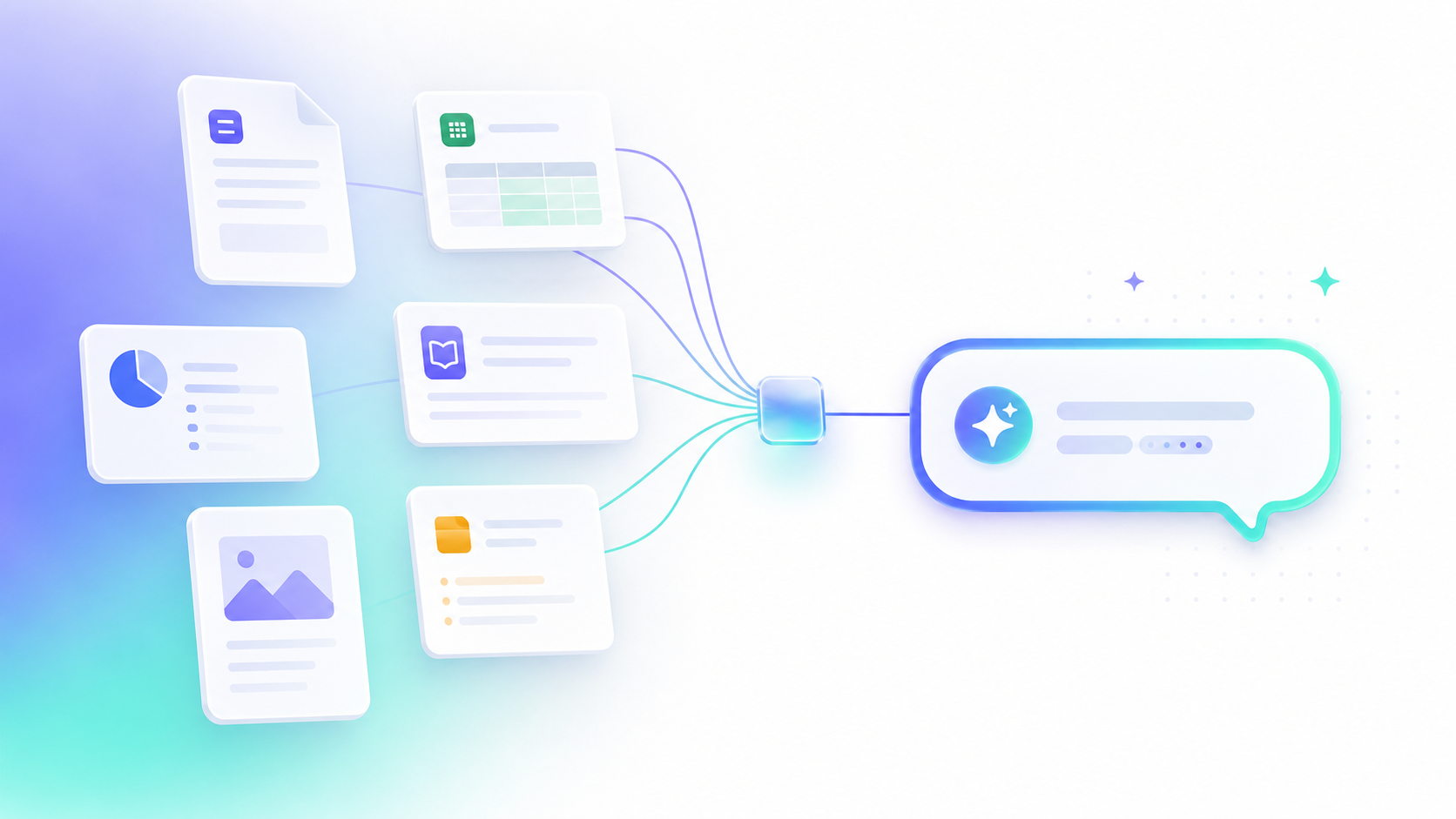
A RAG knowledge base flips it. Your documents live outside the model in a searchable index. Update a doc, re-embed it, and the bot knows the new answer in seconds. No retraining. And because the answer is built from retrieved passages, you can show the source — which is the single feature that earns trust with non-technical stakeholders.
| Approach | Update speed | Source attribution | Cost to change | Best for |
|---|---|---|---|---|
| Fine-tuning | Hours–days (retrain) | None | High | Tone, format, niche style |
| Long prompt stuffing | Instant | Weak | Low but hits token limits | Tiny, static FAQs |
| RAG knowledge base | Seconds | Strong | Low | Support, sales, docs, real-time data |
How RAG grounding actually works
Strip away the hype and a RAG pipeline is four moving parts. Here's the flow I run inside FlowMaticX.
- Chunking. Your source material — help docs, PDFs, listing data, past tickets — gets split into small passages. Chunk too big and retrieval pulls in noise. Too small and you lose context. I aim for semantically coherent chunks, usually a few hundred tokens, split on real boundaries like headings, not arbitrary character counts.
- Embeddings. Each chunk runs through an embedding model that turns text into a vector — a list of numbers capturing meaning. "What's your cancellation policy?" and "Can I get a refund?" land near each other in vector space even though they share no keywords. That's the magic keyword search never had.
- Retrieval. When a user asks something, the question is embedded too, and the system pulls the closest-matching chunks from the vector store. This is where a real database matters: at scale you want approximate nearest-neighbour search (HNSW indexing) so retrieval stays fast as the knowledge base grows.
- Generation with attribution. The retrieved chunks get handed to the language model as context, with an instruction: answer only from this, and if it's not here, say so. FlowMaticX attaches the source back to the answer, so a user — or an auditor — can see exactly which document produced it.
That last step is the one most tutorials skip and most businesses care about most. An answer with a citation is a defensible answer.
The mistakes that make RAG hallucinate anyway
RAG isn't magic dust. A badly built knowledge base hallucinates with full confidence. The failures I see most:
- Garbage chunking. If a refund policy is split across two chunks and retrieval only grabs one, the bot fills the gap by guessing. Fix the chunking, fix half your hallucinations.
- No "I don't know" path. If your prompt doesn't explicitly permit the bot to decline, it will invent. Grounded systems must be allowed to fail gracefully.
- Stale embeddings. You changed the doc but never re-embedded it. The bot is now confidently quoting last quarter's price. Re-indexing has to be part of your content workflow, not an afterthought.
- Retrieving too much. Stuffing twenty chunks into context buries the right answer in noise and burns tokens. Tight retrieval beats greedy retrieval.
- One language assumption. A user asks in Arabic, your knowledge base is in English, and retrieval misses entirely. FlowMaticX handles 10 languages because Armela's customers in Dubai don't all type in English — cross-lingual embeddings matter when your audience is global.
What a production RAG chatbot knowledge base needs
From running this live for clients, here's the checklist I won't ship without:
- A real vector store with fast nearest-neighbour search, not a flat file you scan linearly.
- Source attribution on every answer so trust is earned, not assumed.
- A re-indexing pipeline so updated docs propagate automatically.
- Guardrails — confidence thresholds and a clean fallback to a human or a "let me connect you" path.
- Observability — logs of what was retrieved and answered, so you can debug a bad reply instead of shrugging at it.
- Multilingual support if any slice of your audience isn't English-first.
The reliability layer underneath — hosting, uptime, the boring plumbing — is something I run on my own stack (WaseerHost, cPanel/WHMCS), so when a client's chatbot needs to be up at 2am for an overseas buyer, it's up. That's a footnote, not the headline. The headline is the grounding.
Where RAG fits beyond support chat
Support is the obvious use case, but the same knowledge-base pattern powers more. Sales assistants that answer product questions from a live catalogue. Internal tools that let staff query policy docs in plain English. Data-heavy products — like MenuPriceToday, which tracks 657 menu items across 16 countries with daily updates — are exactly the kind of structured, changing dataset RAG is built to surface conversationally. The knowledge base is the engine; the chat window is just one of many front doors. You can see more of our work for how these pieces fit together in real products.
Start small, ground everything
My honest advice: don't boil the ocean. Pick one painful, repetitive question your customers ask — the refund policy, the delivery times, the "do you support X" — and build a tight RAG knowledge base around that one domain. Ground it, attribute it, watch the logs, then expand. A narrow bot that's never wrong beats a broad bot that's occasionally confidently insane. Every business I've put this in front of cared more about not lying than about answering everything.
If you want a RAG chatbot knowledge base that quotes your real documents, cites its sources, and works in your customers' languages — built by someone who runs this in production every day, not someone reading the same blog posts you are — let's talk. Book a free call and tell me the one question your customers keep asking. We'll scope a grounded chatbot, AI automation, or a custom build around it, and I'll tell you straight what's worth doing and what isn't.
Frequently Asked Questions
What is a RAG chatbot knowledge base?
It's a searchable store of your own documents that an AI chatbot retrieves from before answering. Instead of relying on the model's training memory, the bot fetches relevant passages from your knowledge base and writes the answer from those grounded facts, which sharply cuts hallucination and lets it cite sources.
Is RAG better than fine-tuning for a chatbot?
For most support and sales chatbots, yes. RAG lets you update knowledge in seconds by re-indexing a document, costs far less than retraining, and supports source attribution. Fine-tuning is better reserved for shaping tone or output format, not for storing changing facts like prices or policies.
How does RAG stop a chatbot from hallucinating?
By forcing the model to answer only from retrieved passages and explicitly allowing it to say 'I don't know.' Good chunking, fresh embeddings, tight retrieval, and source attribution together keep answers grounded. Skip those and even a RAG bot will invent answers confidently.
Can a RAG knowledge base work in multiple languages?
Yes. With cross-lingual embeddings, a user can ask in one language and the system still retrieves the right chunk from documents written in another. FlowMaticX handles 10 languages in production, which matters when your audience — like a Dubai real-estate firm's customers — doesn't all type in English.
How long does it take to build a production RAG chatbot?
A narrow, single-domain bot grounded on one set of documents can be scoped and stood up quickly, then expanded. The smart path is starting with one high-volume question, getting the grounding and attribution right, validating with real logs, then broadening the knowledge base from there.
Want this built for your business?