Building Production AI Chatbots with OpenAI and Anthropic
Design, deploy, and scale intelligent conversational agents with GPT-4, Claude, streaming, and context management.

Choosing Between GPT-4o and Claude Sonnet
The first architectural decision in a production AI chatbot is model selection. OpenAI's GPT-4o and Anthropic's Claude Sonnet 3.5/4 are the two dominant choices in 2026, and the right pick depends on your use case rather than benchmark scores alone. GPT-4o excels at structured JSON output, code generation, and function calling with complex tool schemas. Claude Sonnet handles long-context reasoning and nuanced instruction-following with fewer edge cases in safety-critical applications. For customer-facing chatbots, Claude's refusal behavior is more predictable and easier to tune. For developer tooling and code assistants, GPT-4o's function calling is more battle-tested.
Many production systems use both — routing simple FAQ-style queries to a faster, cheaper model and escalating complex or sensitive queries to the more capable one.
Streaming Responses in Next.js
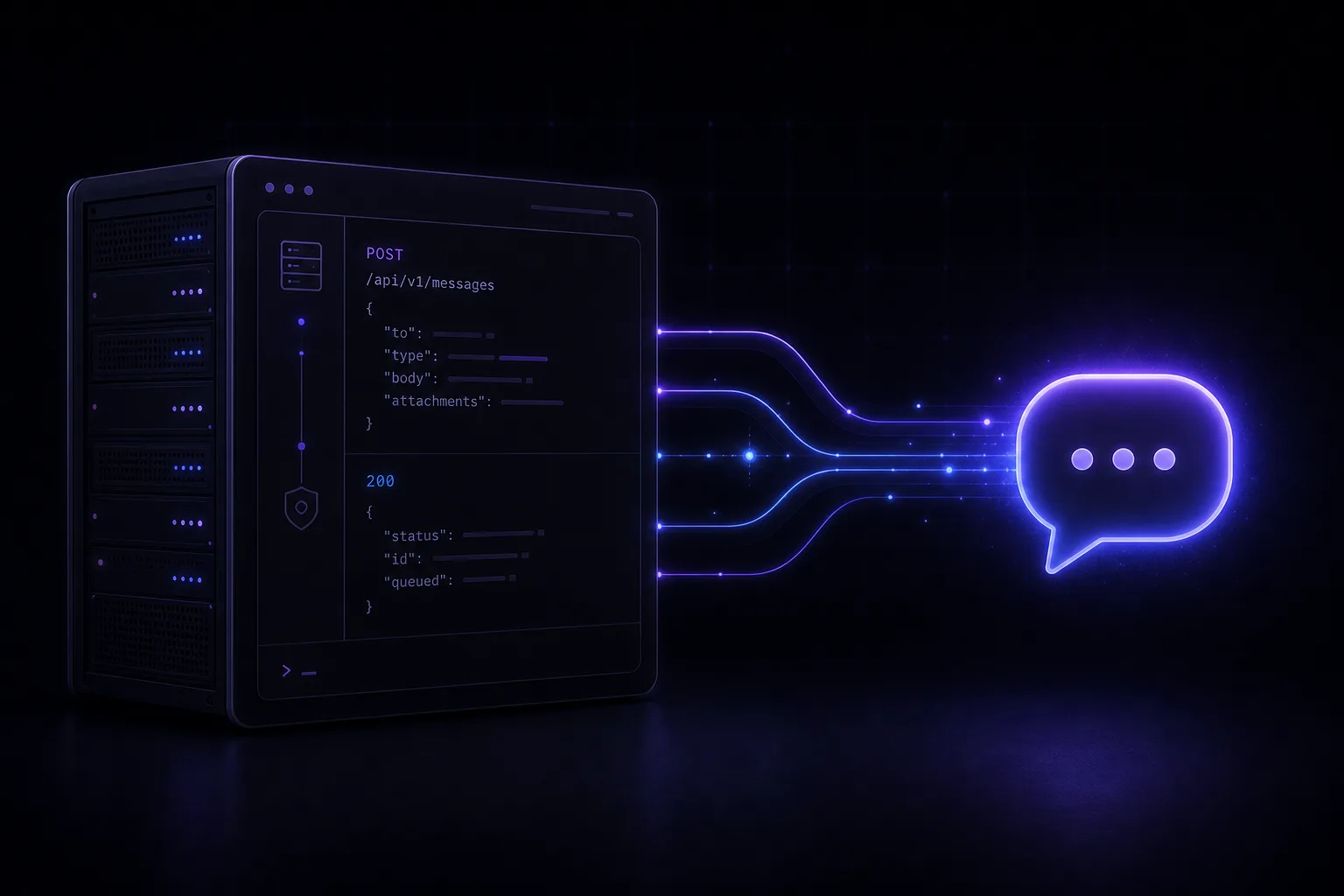
Users abandon chatbots that make them wait for complete responses. Streaming via Server-Sent Events or chunked transfer is non-negotiable. In a Next.js App Router API route:
// app/api/chat/route.ts
import Anthropic from '@anthropic-ai/sdk';

const client = new Anthropic();

export async function POST(req: Request) {
  const { messages } = await req.json();
  const encoder = new TextEncoder();
  const stream = new ReadableStream({
    async start(controller) {
      const response = await client.messages.stream({
        model: 'claude-sonnet-4-5',
        max_tokens: 1024,
        messages,
      });
      for await (const chunk of response) {
        if (chunk.type === 'content_block_delta') {
          controller.enqueue(encoder.encode(`data: ${JSON.stringify({ text: chunk.delta.text })}

`));
        }
      }
      controller.enqueue(encoder.encode('data: [DONE]

'));
      controller.close();
    },
  });
  return new Response(stream, { headers: { 'Content-Type': 'text/event-stream' } });
}
On the client, use the EventSource API or a library like ai from Vercel to consume the stream and update state incrementally.
Function and Tool Calling
Tool calling transforms a chatbot from a text generator into an agent that can query databases, call APIs, and take actions. Define tools with precise JSON schemas — vague descriptions lead to incorrect invocations:
const tools = [{
  name: 'get_order_status',
  description: 'Returns the current status of a customer order by order ID',
  input_schema: {
    type: 'object',
    properties: {
      order_id: { type: 'string', description: 'The alphanumeric order identifier' }
    },
    required: ['order_id']
  }
}];
After the model returns a tool_use block, execute the function, append the result as a tool_result message, and call the API again. This loop continues until the model returns a final text response.
Context Management
Token context is finite and expensive. For multi-turn conversations, implement a sliding window that preserves the system prompt and the most recent N messages. For knowledge-heavy bots, use retrieval-augmented generation — embed the user query, fetch relevant chunks from a vector database like Pinecone or Supabase pgvector, and inject them into the context window rather than loading entire documents.
function buildMessages(history: Message[], newMessage: string, context: string[]) {
  const systemPrompt = `You are a helpful assistant. Use the following context:
${context.join('
')}`;
  const recentHistory = history.slice(-10); // Keep last 10 turns
  return [
    { role: 'user', content: newMessage },
    ...recentHistory,
  ];
}
System Prompts That Work
A weak system prompt is the most common cause of inconsistent chatbot behavior. Effective system prompts include: persona definition, scope boundaries (what the bot should and should not answer), output format instructions, and escalation triggers. Test system prompts adversarially — attempt prompt injection and jailbreaks to verify your guardrails hold.
Rate Limiting and Cost Optimization
Production chatbots need per-user rate limiting to prevent abuse and cost explosions. Use Redis with a sliding window counter:
const key = `rate:${userId}`;
const requests = await redis.incr(key);
if (requests === 1) await redis.expire(key, 60);
if (requests > 20) return new Response('Too many requests', { status: 429 });
For cost optimization, cache identical or semantically similar queries. A simple semantic cache computes an embedding of the user message, checks cosine similarity against recent queries, and returns the cached response if similarity exceeds 0.95. This can reduce API costs by 20–40% for high-traffic FAQ bots.
Safety Filtering
Layer safety at both input and output. Use OpenAI's Moderation API or Anthropic's built-in safety training as a first pass. For domain-specific filtering — blocking competitor mentions, legal advice, medical diagnoses — add a lightweight classification step using a fine-tuned smaller model before passing the request to your primary model. Log all inputs and outputs to a separate audit store for review and model improvement.
Deployment Architecture
Deploy your chat API as an edge function for low latency. Use Next.js middleware to authenticate requests via JWT before they reach the AI endpoint. Implement circuit breakers around the AI API calls so a provider outage gracefully degrades to a fallback message rather than hanging connections. Monitor cost-per-conversation as a primary operational metric, setting alerts when it exceeds your pricing model assumptions.
Building production AI chatbots is now primarily a systems engineering problem. The models are capable — the challenge is context management, cost control, safety, and reliability at scale.
Want this built for your business?